

October 2025 Luxury Housing Report: Fastest Price Growth

[ad_1]
Highlights
October 2025 Luxury Trends
- National luxury prices softened, with the 90th-percentile threshold slipping to $1.22 million (-2.2% YoY), even as ultraluxury ticked up month over month to $5.41 million.
- North Port–Bradenton–Sarasota, FL, surged nearly 20% YoY, the strongest price growth of any U.S. luxury market, while Kahului–Wailuku, HI, posted the steepest decline (-19.9% YoY).
- Luxury homes sold faster than last year across most tiers, with the 90th percentile moving 3 days faster YoY, narrowing the historical gap between luxury and typical listings.
- Minneapolis–St. Paul, MN, is a breakout luxury performer, combining rising prices (+2.7% YoY), faster sales (-10.4% DOM), and exceptional value. Homes priced between $1 million and $2 million average 4,148 square feet, ranking as the third-largest in the nation.
National Overview
| Pricing | October 2025 | Monthly Change | YoY Change |
| Luxury Threshold 90th Percentile |
$1,224,164 |
-1.6% |
-2.2% |
| High-End Luxury Threshold 95th Percentile |
$1,954,598 |
0.1% |
-2.1% |
| Ultraluxury Threshold 99th Percentile |
$5,411,354 |
1.0% |
-3.3% |
| Million-Dollar Listing Share |
12.8% |
-0.2pp |
-0.4pp |
The national benchmark for luxury homes slipped by 1.6% to $1.22 million in October, down 2.2% from a year ago. Similar year-over-year declines were observed for all luxury thresholds. The high-end luxury tier, homes priced at the 95th percentile, dropped 2.1% lower year over year, despite edging up 0.1% month over month to $1.95 million. At the very top of the market, the ultraluxury segment (99th percentile) rose 1% in the month to $5.41 million, though it remains 3.3% lower than one year ago.
Top 10 Markets by 90th Percentile Listing Price
| Rank | Area | Metro/Micro | 10% Most Expensive Listings Start at: | 10% Most Expensive YoY | Average Annual Million-Dollar Listing Count | Multiple to Median Listing Price |
|
1 |
Heber, UT |
Micro |
$6,500,000 | 8.4% | 928 | 4.5 |
|
2 |
Key West-Key Largo, FL |
Micro |
$4,824,500 |
1.7% |
718 |
3.8 |
|
3 |
Bridgeport-Stamford-Danbury, CT |
Metro |
$4,249,600 |
-7.5% |
614 |
5.3 |
|
4 |
Los Angeles-Long Beach-Anaheim, CA |
Metro |
$3,996,297 |
-6.3% |
9,795 |
3.6 |
|
5 |
Kahului-Wailuku, HI |
Metro |
$3,791,000 |
-19.9% |
677 |
3.4 |
|
6 |
San Jose-Sunnyvale-Santa Clara, CA |
Metro |
$3,750,400 |
-6.2% |
1,095 |
2.7 |
|
7 |
Naples-Marco Island, FL |
Metro |
$3,443,693 |
-2.1% |
1,946 |
4.9 |
|
8 |
New York-Newark-Jersey City, NY-NJ |
Metro |
$3,017,194 |
-7.7% |
12,310 |
4.0 |
|
9 |
Oxnard-Thousand Oaks-Ventura, CA |
Metro |
$2,999,999 |
-6.5% |
697 |
3.0 |
| 10 |
San Diego-Chula Vista-Carlsbad, CA |
Metro | $2,894,369 | -2.8% | 2,336 |
3.1 |
(Among metropolitan and micropolitan areas that averaged at least 500 million-dollar listings over the 12 months through October 2025)
Price Changes
Among the 10 most expensive luxury markets, 8 posted annual price declines in October. The sharpest drop occurred in Kahului-Wailuku, HI, where the entry point to luxury fell nearly 20% year over year.
When comparing each metro’s luxury threshold to its typical home price, the Bridgeport-Stamford-Danbury, CT, area shows the widest spread, with the 90th percentile price sitting 5.3 times higher than the local median listing price. This is the widest margin across all metros that have averaged at least 500 million-dollar listings over the past year. This reflects a highly segmented market, where inventory spans from homes just above the national median to multimillion-dollar coastal estates. In Fairfield’s 06824 ZIP code, for example, prices can easily exceed $5 million, underscoring the stark range of values within the region.
By contrast, the San Jose-Sunnyvale-Santa Clara, CA, metro has the lowest multiple, at 2.7, pointing to a more compressed price distribution. The gap between typical and luxury listings is narrower, not because high-end homes are less expensive, but because overall prices are elevated. The median listing price here approaches $1.4 million, one of the highest in the country.
| Indicator |
October 2025 |
Monthly (Days) | YoY (Days) |
|---|---|---|---|
| Median Days on Market 90th Percentile |
78 |
1 day faster |
3 days slower |
| Median Days on Market 95th Percentile |
86 |
3 days faster |
1 day slower |
| Median Days on Market 99th Percentile |
103 |
Same |
3 days faster |
| Median Days on Market Median Listing |
63 |
1 day slower |
5 days slower |
Across the luxury tiers, most price segments saw slightly longer marketing times compared with last year, with the ultraluxury tier (99th percentile) standing out as the only segment to sell faster year over year. The overall median listing time also lengthened, rising by 5 days year over year to 63 days in October.
A Narrowing Gap:
The gap between luxury and typical home marketing times remains tighter than the historical norm, showing that relative demand in the luxury segment is holding up better than expected:
- 90th percentile: 78 days on the market, 15 days slower than the median (historically ~20 days)
- 95th percentile: 86 days, 23 days slower than the median (historically ~30 days)
- 99th percentile: 103 days, 40 days slower than the median (historically ~50 days)
This compression suggests that luxury buyers remain active and engaged, even as affordability pressures affect other parts of the market.
Entry-Level Luxury Decelerates:
Homes in the entry-level luxury tier (90th percentile) spent a median of 78 days on the market, 3 days slower compared to last year. A slight deceleration suggests that buyers are being more selective than they were in the previous months. The 95th percentile followed a similar pattern, moving 1 day slower year over year.
Ultraluxury Accelerates:
At the very top of the market, ultraluxury homes (99th percentile) spent a median of 103 days on the market, 3 days faster than one year ago, suggesting that demand at the highest price points has stabilized rather than continued to soften. This softening does not necessarily signal broad increased demand, as the segment comes with some inherent volatility: with far fewer listings, even small shifts in buyer activity can produce wider swings in performance.
At these price levels, pricing becomes significantly more complex. Ultraluxury homes often have few or no accurate comparables, making it more challenging for sellers and agents to set realistic expectations. Unique architecture, one-of-a-kind locations, custom build-outs, and highly individualized amenities mean that finding the appropriate price point requires far more nuance than a home near the national luxury threshold of $1.22 million. As a result, negotiation dynamics tend to favor well-positioned buyers, particularly when sellers overshoot early pricing.
From a seasonal standpoint, days on the market for luxury homes will continue to follow familiar patterns, typically peaking in the winter and reaching their lows in late spring and early summer, mirroring broader market activity.
Fastest Price Growth Markets
| Rank | Area | 10% Most Expensive Listings Start at: | Price for top 10% Listings YoY | Median Days on Market top 10% |
|
0 |
USA |
$1,224,164 |
-2.2% |
4.0% |
|
1 |
North Port-Bradenton-Sarasota, FL |
$1,667,143 |
19.3% |
10.0% |
|
2 |
Heber, UT |
$6,500,000 |
8.4% |
-10.6% |
|
3 |
Tampa-St. Petersburg-Clearwater, FL |
$1,054,960 |
8.0% |
9.8% |
|
4 |
Bend, OR |
$1,896,863 |
7.1% |
17.8% |
|
5 |
Boise City, ID |
$1,339,526 |
3.1% |
-14.4% |
|
6 |
Minneapolis-St. Paul-Bloomington, MN-WI |
$995,404 |
2.7% |
-10.4% |
|
7 |
Dallas-Fort Worth-Arlington, TX |
$990,350 |
1.9% |
0.8% |
|
8 |
Atlanta-Sandy Springs-Roswell, GA |
$933,364 |
1.8% |
3.3% |
|
9 |
Key West-Key Largo, FL |
$4,824,500 |
1.7% |
12.7% |
|
10 |
Nashville-Davidson–Murfreesboro–Franklin, TN |
$1,592,687 |
1.2% |
9.9% |
(Among metropolitan and micropolitan areas that averaged at least 500 million-dollar listings over the 12 months through October 2025)
Localized hot spots that have shrugged off national softness
With the overall U.S. luxury threshold declining by 2.2% year over year, the North Port-Bradenton-Sarasota, FL, metro stands out as the undisputed leader in price momentum. With a luxury entry point of $1.67 million, the area saw a nearly 20% increase in homes with top 10% listing prices over the past year, demonstrating a significant draw to Gulf Coast Florida. This growth outpaces all other metros by a considerable margin. The region isn’t just a fast-growing luxury hub; it’s also a go-to destination for the wealthiest retirees in the U.S.
Beyond raw price growth, the most competitive markets are those where an accelerating transaction speed accompanies price appreciation. These high-velocity luxury metros demonstrate rising demand that is tight enough to reduce inventory friction. In October, only three top-growth metros showed this combined strength:
- Heber, UT (8.4%)
- Boise City, ID (3.1%)
- Minneapolis-St. Paul-Bloomington, MN-WI (2.66%)
In all three markets, the 10% most expensive homes are spending fewer days on the market than they were one year ago. This suggests that buyers in these areas are not only willing to meet rising prices but are competing for available inventory, signaling robust market health amid a generally easing housing market, and outpacing the national luxury trend.
Largest Price Declines (YoY)
| Rank | Area | 10% Most Expensive Listings Start at: | Price for top 10% Listings YoY | Median Days on Market top 10% YoY |
|
0 |
USA |
$1,224,164 |
-2.2% |
4.0% |
|
1 |
Kahului-Wailuku, HI |
$3,791,000 |
-19.9% |
-4.3% |
|
2 |
Charleston-North Charleston, SC |
$1,994,500 |
-13.1% |
-13.9% |
|
3 |
Atlantic City-Hammonton, NJ |
$2,324,950 |
-13.0% |
-20.6% |
|
4 |
Austin-Round Rock-San Marcos, TX |
$1,332,650 |
-11.0% |
-5.2% |
|
5 |
Port St. Lucie, FL |
$1,011,473 |
-9.0% |
21.4% |
|
6 |
Cape Coral-Fort Myers, FL |
$1,057,360 |
-7.8% |
3.7% |
|
7 |
New York-Newark-Jersey City, NY-NJ |
$3,017,194 |
-7.7% |
-8.9% |
|
8 |
Bridgeport-Stamford-Danbury, CT |
$4,249,600 |
-7.5% |
-42.5% |
|
9 |
Oxnard-Thousand Oaks–Ventura, CA |
$2,999,999 |
-6.5% |
15.9% |
|
10 |
Los Angeles-Long Beach-Anaheim, CA |
$3,996,297 |
-6.3% |
4.0% |
(Among metropolitan and micropolitan areas that averaged at least 500 million-dollar listings over the 12 months through October 2025)
The metros posting the strongest luxury gains are counterbalanced by markets seeing the steepest price corrections, many of them COVID-19 pandemic-era boomtowns or high-volatility resort destinations where prices overheated in recent years. Kahului-Wailuku, HI, recorded the most significant year-over-year decline in its luxury threshold, falling nearly 20% to $3.79 million, a sharp recalibration after years of substantial upward pressure. Other notable declines include Charleston, SC, and Atlantic City, NJ, each down more than 13% compared with last year.
A key metric for market health is whether a price drop is accompanied by renewed buyer interest. In several key markets, price corrections have successfully cleared inventory and accelerated sales. The Bridgeport-Stamford-Danbury, CT, metro area, for instance, saw a 7.5% price decline but experienced an immense acceleration in sales speed, with days on the market dropping by 42.5% year over year. This indicates a new equilibrium being established, with seller expectations aligning with buyer demand through price recalibration.
Other metros, including Charleston, SC, Atlantic City, NJ, and Austin, TX, also saw double-digit or near-double-digit price drops accompanied by faster sales, signaling that their luxury segments are correcting effectively to reignite transaction volume. In contrast, markets like Port St. Lucie and Los Angeles saw prices drop, but sales pace still slowed, suggesting the price correction has not yet been deep enough to satisfy current buyer demands.
Market spotlight: Minneapolis-St. Paul-Bloomington, MN-WI
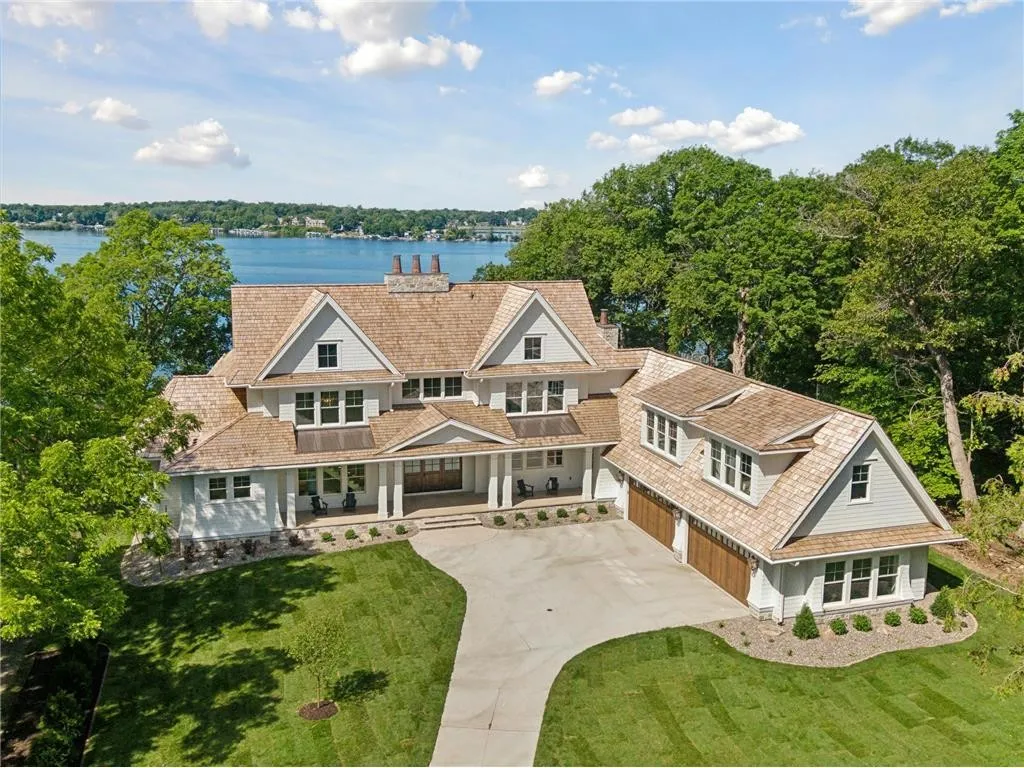
Minneapolis stands out as one of the nation’s most approachable luxury markets, even after a 2.7% year-over-year increase in the luxury threshold. The entry point to luxury sits just below the $1 million mark, at $995,404, which is well under the national benchmark of $1.22 million. Homes at this tier are moving quickly, with days on the market down 10.4% from last year, an indicator of strong buyer demand despite higher price points.
At the upper end, high-end luxury begins at $1.55 million, while ultraluxury starts at $3.48 million. These are undeniably premium price levels, yet they remain more accessible than the entry thresholds seen in many coastal metros. The pool of million-dollar listings has also expanded, rising 10% year over year, just below the national trend of 11.3%, but still signaling growing inventory in the market’s higher tiers.
One of Minneapolis’s defining advantages is space. Luxury buyers get far more home for their money here: properties in the $1 million to $2 million range averaged 4,148 square feet in October, well above the national median of 2,990 square feet and the third-highest in the country.
Taken together, the Minneapolis metro offers a compelling blend of livability, substantial square footage, and amenities that would command significantly higher premiums in other major U.S. markets.
Methodology
All data in this report is sourced from Realtor.com® listing trends as of October 2025, reflecting active inventory of existing homes, including single-family residences, condos, townhomes, row homes, and co-ops. Listings reflect only those posted on MLS platforms that provide listing feeds to Realtor.com. New-construction listings are excluded unless actively listed on participating MLSs.
Luxury segmentation is based on market-specific price percentiles, with the 90th percentile representing entry-level luxury, the 95th percentile marking high-end luxury, and the 99th percentile indicating ultraluxury. All calculations are based on listing prices, not final sales prices.
Metropolitan and micropolitan areas are defined using the Office of Management and Budget’s OMB-2023 delineations, with Claritas 2025 household estimates used for relative comparisons. Where appropriate, we limited analysis to metros or micros with a minimum threshold of active million-dollar listings on average over the past year to ensure meaningful comparisons.
Historical listing trend data extends to July 2016, but year-over-year comparisons in this report use October 2024 as the baseline.
Luxury by the Numbers
90th percentile = Entry-level luxury (top 10% of prices)
95th percentile = High-end luxury
99th percentile = Ultraluxury (often rare or custom properties)
[ad_2]
Source link






Leave a comment