

‘Power casual’ is the new clothing trend that everyone is wearing – 6 easy ways to master the look
[ad_1]
I am ashamed to admit I change my outfit, on average, 2.5 times every morning before leaving the house. It’s almost always for the same reason – I find myself struggling to strike the perfect balance of smart and casual in my workwear ensemble.
If I show up in something too formal, my boss will think I’ve got an interview elsewhere. Cue sidelong glances. Straight-leg dark wash jeans are, in theory, polished. Unless they’re worn with trainers. Heels are an obvious choice, but risk the blisters? No thanks. The list goes on…
Navigating today’s workwear dress code – or lack thereof – is nothing short of a style conundrum. Gone are the days of shoulder-padded skirt suits that my mother’s generation wore to work. Similarly, at the opposite end of the spectrum, we’ve moved past pandemic-era waist-up dressing, with leggings once again relegated to the gym. Add to that the fact that achieving a work-life balance feels harder than ever, plus the cost-of-living crisis, and it’s no wonder we’re demanding more from our wardrobes.
Everyone’s clicking on…
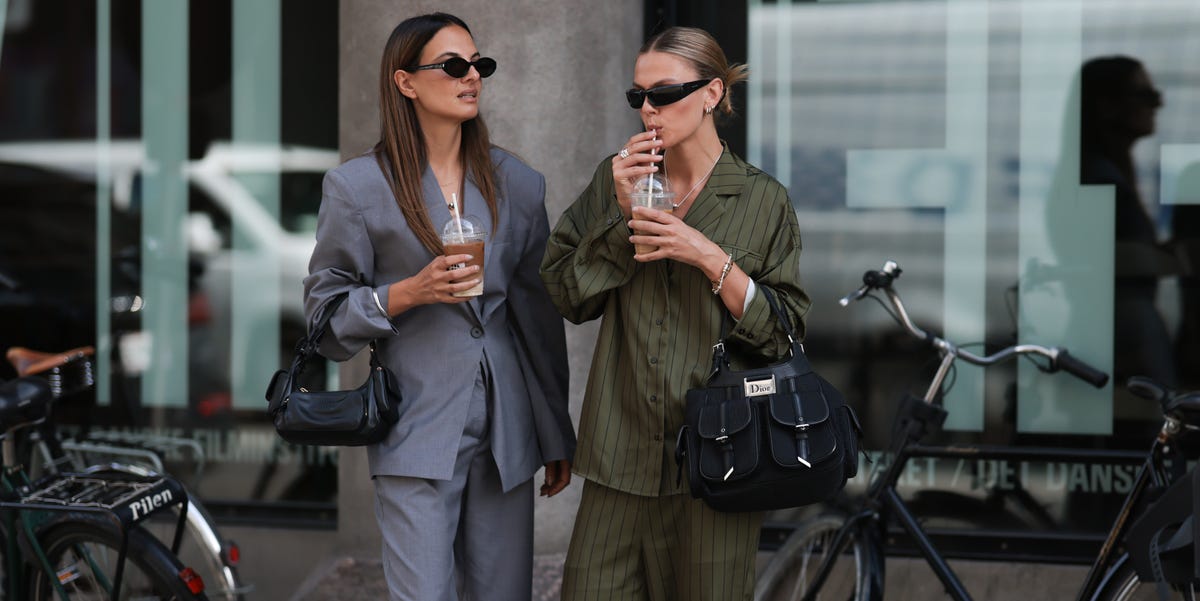
Enter the new ‘power casual’ phenomenon. Also referred to as ‘business comfort’ or ‘workleisure’ per The New York Times, it’s an aesthetic that seamlessly blends the authority of traditional ‘power dressing’ and the smart and sophisticated finish it promises, with comfortable fabrics and design features. Think fine knitwear layered under blazers, heels no higher than kitten height, elasticated waists and wide legs.


A blazer adds instant structure, dressing up even the most casual of outfits.
In today’s ever-evolving office aesthetic, power casual is emerging as the dominating trend spanning all levels of seniority from interns to senior management. In a survey of over 2,000 UK office employees conducted by TK Maxx, 47% of those surveyed reported that comfort was their top priority in dressing for work, over looking professional or adapting their outfit to be weather-appropriate. And yet, 45% of people in the same survey said their wardrobes are more formal now compared to a few years ago.
This is exactly where power casual’s mass appeal comes in, effortlessly delivering on both. “People are craving the psychological benefits of both style and comfort,” says fashion psychologist and host of The Wearapy Show, Shakaila Forbes-Bell. “Studies show that formal, well-tailored clothing makes people appear more resourceful, successful and in demand. Formal clothes also change the way you think and speak, making you more likely to approach problems holistically and engage in big-picture thinking.”

Trainers with streamlined silhouettes in luxe fabrics like leather and suede have a sophisticated feel.
It’s no secret that what you wear can have a big impact on your own mentality, but it also influences how others see you. “Casual clothing, on the other hand, has been found to have social benefits, making the wearer feel more approachable and down-to-earth while encouraging them to focus on the granular details of their work projects,” Forbes-Bell continues. “Comfortable clothing has also been shown to have cognitive benefits, allowing wearers to focus and perform better on complex tasks.”
An increase in formal dressing is no doubt a direct result of more and more office workers returning to in-person work over remote working set-ups established due to Covid. It’s not surprising a change in scenery prompted excitement over a change in attire, too. See Kat from Finance, whose corporate slays – AKA ‘outfit of the day’ posts captured in the office bogs – went viral at the beginning of this year for her bold, creative takes on workwear that consisted of high-fashion pieces from Balenciaga sunglasses to Maison Margiela Tabis.
However, adopting a similar and consistent office aesthetic isn’t realistic for many workers. And it’s clear we’re not prepared to abandon our pandemic priorities totally. According to a study by YouGov, just 7% of workers wear a suit to work. Instead, ‘smart casual attire’ ranked as the most common work attire, which 34% of workers said describes what they wear.

Update traditional workwear by opting for modern, oversized fits.
“I work for a design agency and my work outfits are a sweet balance of casual but considered. My work ‘uniform’ normally consists of loose-cut jeans, a white cotton T-shirt, fashion trainers and chunky jewellery,” says Polly, 30, a Senior Account Manager. “I’m in a client-facing role, so sometimes make a bit more effort – perhaps swapping for a button-down shirt. I love the casual approach for my workplace, it’s straightforward but also allows me to express myself.”
This mentality isn’t just reserved for office employees. “The rise in office casual has also occurred alongside a lifestyle shift, where work-life is no longer balanced but instead blended,” Forbes-Bell states. “The rise in side hustles and always-on social media personas has led to more people turning their lives into full-fledged businesses run from bedrooms with camera studio set-ups.”
With our work wardrobes ever-evolving to meet the demands of a modern workplace, it tracks that searches for ‘office casual outfits’ are up 53% on Google. The real-world implications are easy to spot for those in retail, with many brands reporting they’ve observed a distinct evolution in womenswear buying patterns that reflects the rise of ‘power casual’ as a dominant workwear aesthetic.

A white t-shirt gives a clean look, but in a more relaxed cut than a button-down collared design
“At Harrods, our customers are prioritising comfort without compromising on sophistication,” Clemmie Haris, Head of Buying – Contemporary, Sport & Essentials, tells Cosmopolitan UK. “Tailoring has seen a notable resurgence, particularly soft suiting and wide-leg trousers, which offer structure with ease. Knitwear is also thriving, especially elevated staples like cashmere vests and lightweight sweaters, often styled under blazers for a polished yet relaxed look.”
It’s a similar story at Rails, an LA-based brand known for blending the sophistication typical of European fashion with effortless Californian style. Best known for its iconic plaid shirts – the ultimate in casual and comfortable dressing – customers are gravitating more towards “versatile silhouettes that can be worn season after season,” reports Jeff Abrams, Rails Founder and CEO. Since the first UK store opened three years ago, bestsellers now include the tailored Doris blazer and Miranda cashmere-silk sweater, both of which “can be easily dressed up or down without compromising on comfort.”

Denim, including light wash jeans, can be considered smart when balanced with inherently formal staples.
The idea of a work wardrobe is no longer about rigid attire confined solely to the office, wherever that may be for you. Instead, modern professionals are building wardrobes that simultaneously deliver both comfort and elegance, able to seamlessly transition between settings and occasions. It’s about wearing pieces that make you feel empowered and authentic, whether in a meeting or out with friends for post-work drinks.
“I work in live sport, and when I’m not on-site in uniform, my office operates a very casual dress code. I normally alternate between a relaxed tailored trouser and jeans, always paired with a bright tee or sweater, depending on the season,” Maddie, a 27-year-old Production Coordinator, shares. “My priority is always comfort. I’ll wear the same clothes I wear at the weekend, just perhaps styled a little differently for work.”

Don’t forget about accessories! A knotted neck scarf or necklace stack adds a feeling of considered intention.
Be it the fact we can’t afford to have separate work and ‘off-duty’ wardrobes, or simply that the way daily life is now structured blurs the boundaries of the two, but our clothing is forced to carry across our different remits. While it’s safe to conclude dress codes are no longer considered important to many, more than that, they’re no longer relevant at all.
Follow Alex on Instagram.
Alexandria Dale is the Digital Fashion Writer at Cosmopolitan UK. Covering everything from the celebrity style moments worth knowing about to the latest fashion news, there’s nothing she loves more than finding a high street dupe of a must-have designer item. As well as discovering new brands, she’s passionate about sustainable fashion and establishing the trends that are actually worth investing in. Having worked in fashion journalism for six years, she has experience at both digital and print publications including Glamour and Ok!
[ad_2]
Source link
How to Layer Clothes Like a Pro: Shop 8 Outfit Ideas
Comments
[…] have revolutionized photography as highlighted here, or how clothing trends evolve as discussed here, outdoor cooling solutions are no […]



Leave a comment